

All About Rum and an Exclusive Property.
08.06.2026For a long time, it was the drink of pirates, plantation workers, and cheap cocktails on a beach lounger. Today, rum is found in bars that strive for purist elegance – in glass carafes made specifically for it, alongside bottles that collectors bid on for five-figure sums. The rise is remarkable. And it is no coincidence.

The world of premium spirits is experiencing a shift in its centers of gravity. While Scotch whisky and cognac reliably serve their loyal clientele, a new generation of discerning drinkers is seeking something fresh – depth without pretension, heritage without exclusivity. Rum offers all of this, and it does so with a sensual generosity that no other spirit embodies so effortlessly.
From the beach chair to the library
What has changed? First and foremost: the consumers themselves. Anyone who picks up a twenty-year-old Rhum Agricole from Martinique or a limited-edition single-cask bottling from Barbados today does so with the same seriousness they would bring to a Grand Cru Classé. The questions that matter are the same: Where from? How long aged? In what wood? What does the soil say?
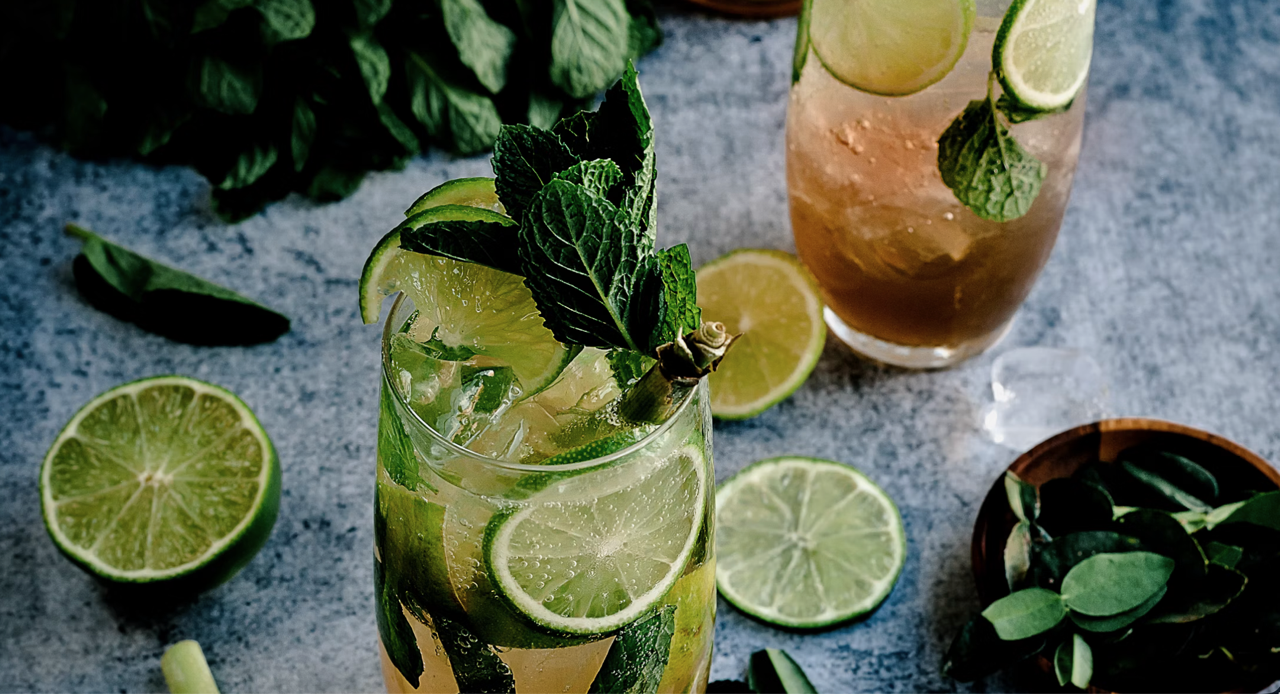
The leap in rum quality began gradually in the 1990s with the return of Tiki culture and accelerated in the following decade, when a handful of ambitious distilleries began doing what had secured the whisky industry’s reputation for decades: creating transparency regarding origin, age, and production. Today, numerous producers follow this model, and the market rewards them for it.
The New Icons: Four Distilleries Setting the Standard
Not all rum is created equal. Just as there is a world of difference between a village wine from the supermarket and a Premier Cru, the rum universe offers a broad spectrum ranging from industrial mass-produced products to highly artisanal craftsmanship. Those looking to get started should look to a few reliable names:
From Barbados: Foursquare Distillery
Described by connoisseurs as the “Patek Philippe of rum” – limited-edition ECS bottlings with strong collector demand and proven appreciation in value.
From Martinique: Rhum Agricole AOC
Made from fresh sugarcane juice instead of molasses, with a controlled designation of origin – the Burgundy of rums.
From Guatemala: Ron Zacapa XO
Aged in a blend of oak, sherry, and cognac barrels at an altitude of 2,300 meters. A rum for those who wish to combine the depth of whiskey with tropical elegance.
From Jamaica: Appleton Estate
Aged up to 30 years, with a deep cultural heritage. A cornerstone of the portfolio for serious collectors with global recognition.
The Rum Renaissance and What Drives It
Several forces are at work behind this trend.
First: the preference for premium products among people who can afford them. More and more people – and here the rum market notably overlaps with the luxury real estate market – are opting for fewer, but better, items. Instead of six average bottles a year, they prefer one exceptional one. Instead of a large space in a mediocre location, they prefer the perfect floor plan at the right address.
Second: an awareness of origin and craftsmanship. The craft cocktail market grew by 18 percent in the U.S. alone in 2023. Rum-based cocktails accounted for nearly 30 percent of premium sales. Mixologists who previously focused on whiskey and cognac are discovering in rum a flexibility that the noble Scottish spirit simply lacks: the spectrum ranges from ethereal and fresh to buttery and caramel-like to peaty and smoky. No other spirit offers this range.
Thirdly, finally: the time factor. Aged rum is rare. Aging in a tropical climate – aided by high temperatures and humidity – proceeds significantly faster than in Scottish warehouses; consequently, the barrels are smaller and the quantities more limited. Anyone who buys a 25-year-old single-cask bottling today is acquiring something that cannot be reproduced in any quantity. That is the logic of rarity – and it works.
The value of matured, limited-edition bottlings is determined primarily by rarity and collector demand – not by daily market fluctuations.
Drinking rum with style
Those who wish to cultivate a taste for rum should not start with the most expensive bottle, but rather with curiosity and structure. A good home bar does not need a hundred bottles. It needs depth in a few, carefully selected selections. Three to five rums from different regions and styles – including at least one aged rum of ten or more years – are sufficient to open up a true horizon for visitors.
The glass plays a bigger role than is commonly assumed. A tulip glass, which concentrates the aromas, makes the difference between a fleeting impression and a complete taste experience. Water, used sparingly, opens up many rums in a way reminiscent of uncorking a Burgundy. And patience – that virtue required when dealing with all things good.
Rum as an Investment: Spirits and Capital Investment
In the UK and increasingly on the European mainland, a small but growing community of rum investors has emerged. The principle is similar to that of whiskey investment: limited-edition bottlings from renowned distilleries, ideally with transparent age statements and a traceable production history, appreciate in value as supply decreases while interest rises. Imports of premium rum grew by 20 percent between 2020 and 2023 – an indicator that catches investors’ attention.
The analogy to the world of luxury real estate is not merely a metaphor. Both markets reward patience. Both benefit from scarcity and location – whether it’s an older building in a prime location or a rum from a vintage that will never return. And in both segments, it is ultimately the combination of quality, provenance, and the right moment that matters.
The best rum isn’t necessarily the most expensive. It’s the one you drink with the right person, in the right setting – perhaps in the evening, when the light glistens on the lake and the silence is deep enough to let a twelve-year-old Barbados rum tell its story.
Investing in Bermuda
Among the many island nations that have made rum their trademark, Bermuda occupies a particularly interesting niche. Thanks to its unique climate and maritime location, the island produces rums that are smooth yet powerful, complex yet inviting.

Bermudian rum often leans toward the darker side — rich, molasses-based distillates that evoke the scent of sea air, mingled with brown sugar and spices. The limestone-filtered water used in fermentation contributes to its purity and balance, while aging in the island’s humid cellars deepens its colour and aroma.
And where the scent and aroma of rum mingle with the fresh sea air, it’s also an excellent place to invest. Christie’s International Real Estate recently featured a property in an online post that not only inspires dreams but – provided you have sufficient funds – is available for purchase: Chelston Estate.

Although Chelston is not an old estate, it holds an important place in the hearts of generations of Bermudians and American expatriates who have made the small island their home. Built in the late 1930s, the estate served as the official residence of the U.S. Consul General from 1964 to 1998. It thus became the impressive backdrop for the grand Fourth of July celebrations, to which thousands of islanders were invited over the years to enjoy fireworks and picnics on the expansive lawns.

Karin Sinclair of Sinclair Realty Bermuda Christie’s International Real Estate describes the estate, built on the outskirts of the island’s capital, Hamilton, as “unique.” “Bermuda is an absolutely gorgeous – albeit tiny – island, with an area of just 21 square miles (54 km²). The 14-acre (5.7 ha) residential estate in Chelston is, without question, a true rarity,” she says. “But these 14 acres also offer a prime location right on Grape Bay Beach – think pink sand and turquoise water – and you can walk into town. It’s the best of all worlds.”
But it is the view from the house that will impress visitors lucky enough to be invited to the estate. “Even from the entry hall, the view of the Atlantic is simply breathtaking,” says Sinclair. “From the living room, you step out onto a deep, south-facing veranda. When you open the French doors, you can hear the sound of the ocean.”