

Bizarre buildings from around the world.
22.07.2026For many people, home ownership is far more than just an investment – it is an expression of heritage, memories and personality. Nowhere is this more strikingly evident than in the Indian state of Punjab, where emigrants adorn their homes with enormous sculptures of aeroplanes, tanks or footballers. The photographer Rajesh Vora has documented this extraordinary tradition over the years. A look at a region where architecture becomes a stage for life stories – and a tour of other buildings worldwide that show just how individually one can express one’s home.
Punjab: When the water tank becomes art

In the villages of the Doaba region in the Indian state of Punjab, oversized sculptures sit atop numerous homes: aeroplanes, tanks and footballers adorn the roofs, representing an unconventional blend of art and architecture. Known as “showpieces”, these structures also serve a practical purpose: they double as water tanks.

Photographer Rajesh Vora travelled some 6,000 kilometres across the state to document hundreds of these works. His photographs were on display as part of the “Everyday Baroque” photography exhibition at the Rencontres d’Arles in France.
A tradition of returnees

Particularly noteworthy is the origin of these buildings: the regional tradition emerged in the late 1970s amongst Indian emigrants who had moved to other parts of the world but retained their residence in their homeland.

The sculptural roof structures are thus a visible sign of a connection that endures across continents. As the owners often live abroad, many of the houses stand empty for much of the year – in their absence, the architectural additions serve as a reminder of the residents’ unique history and connection to the region. Home ownership becomes a statement here: even from a distance, the connection to one’s homeland remains visible – in concrete, colour and sculptural form.
Architecture as an expression of individuality – elsewhere too
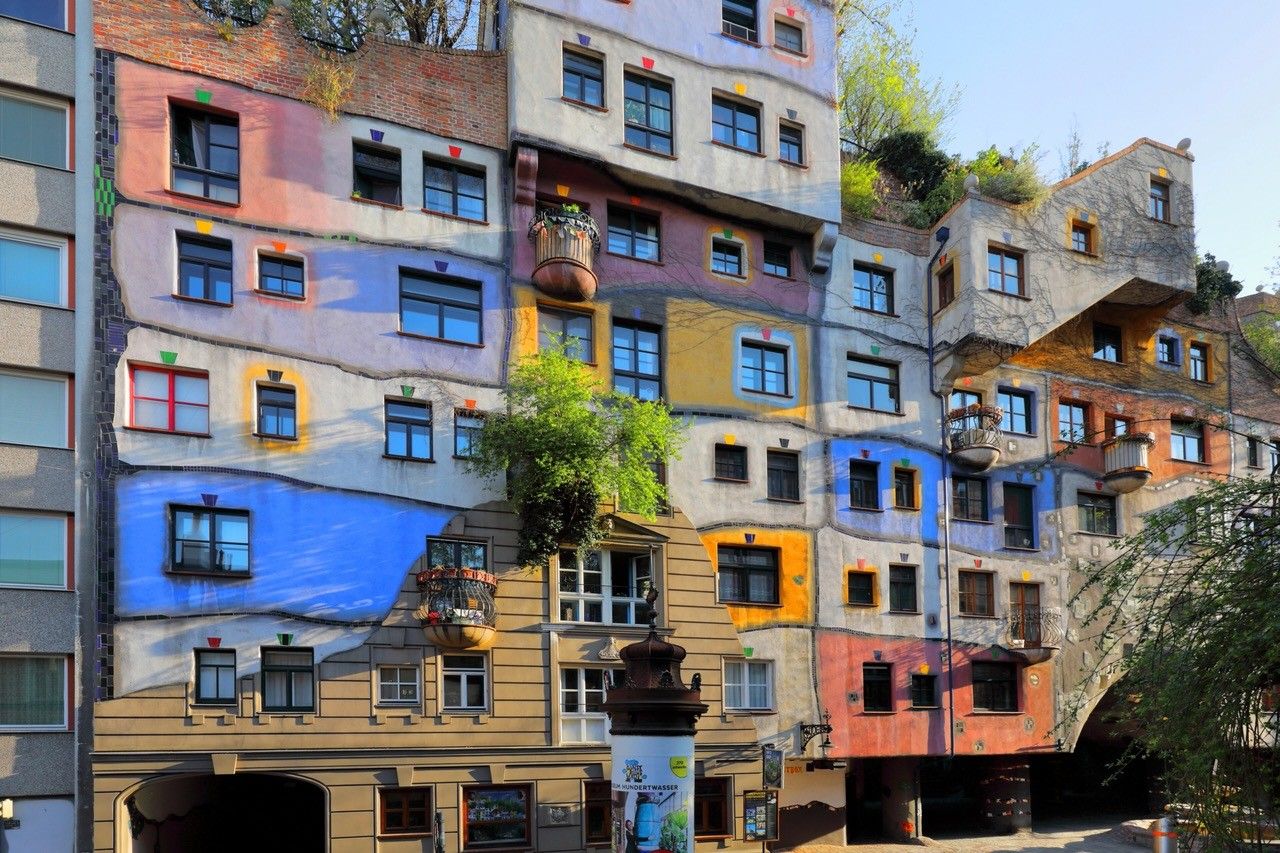
The Punjab is not an isolated case. All over the world, there are residential buildings that deliberately break with convention and become works of art in their own right. In Vienna, for example, Friedensreich Hundertwasser created, with the residential building named after him, a structure without straight lines and featuring green roof terraces, which has long since become an integral part of the cityscape.
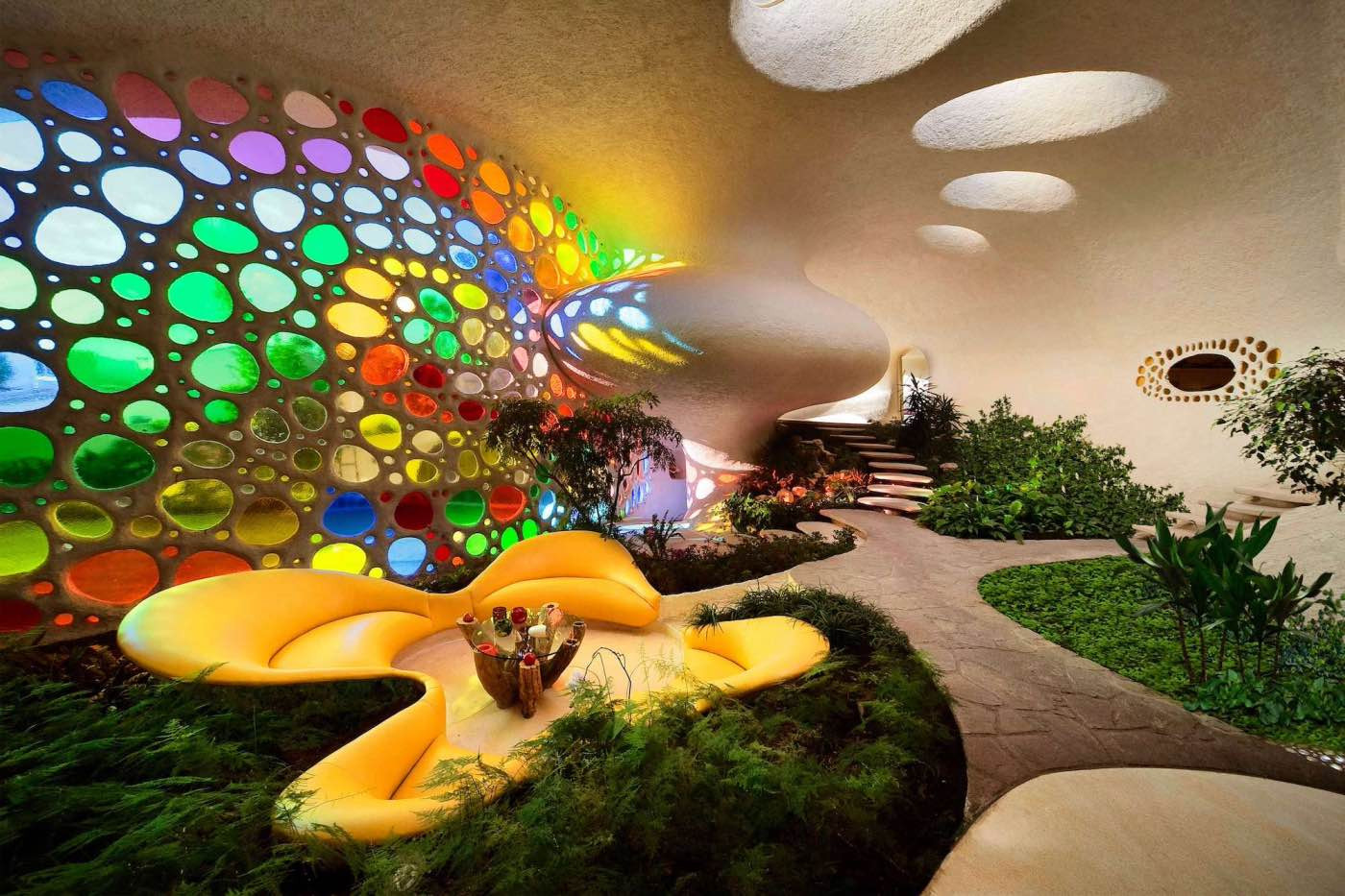
In Mexico City, meanwhile, the architect Javier Senosiain realised his “Nautilus House”, a shell-shaped residential building whose flowing, organic forms do away with right angles entirely.
And in Sopot, Poland, the so-called “Krzywy Domek” (‘Crooked House’), designed in 1997 by Szotyńscy & Zaleski, attracts numerous visitors year after year with its distorted, undulating façade.
What unites these buildings, despite their very different architectural styles, is that they treat the home not merely as a functional shell, but as a stage for creativity, heritage and personal history.
What this means for lovers of exclusive architecture
Whether in the Punjab, Vienna or Mexico City: the most extraordinary buildings emerge where owners lend their property a distinctive, personal touch. When purchasing an exclusive property in Switzerland, too, it is worth paying attention to architectural details that lend a property character and distinctiveness – be it unusual materials, a distinctive design language or a deliberately crafted connection to the landscape. After all, in the end, it is often precisely these special features that turn a house into a home.
A book about bizarre buildings has been published by Colossal
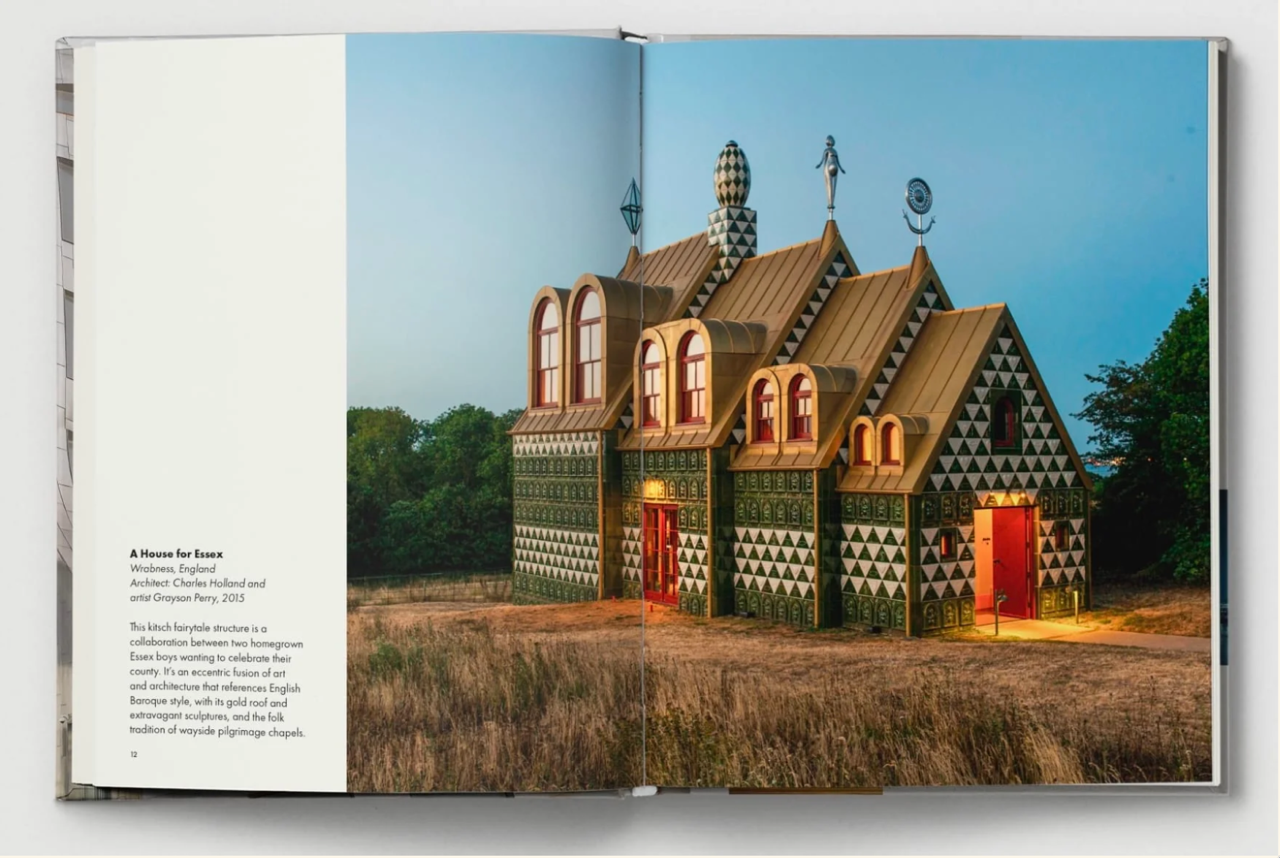
Incidentally, a book on the same subject has also been published recently: ”Weird Buildings”. This richly illustrated volume showcases more than 100 unusual and structurally-imaginative architectural marvels from around the globe. Whether playful or provocative, all the buildings in this book push at the boundaries of convention. From the fluid forms of Zaha Hadid’s mountaintop museum to a whimsical teapot-shaped service station, this is a playful and inspiring tour of the world’s weirdest – and most wonderful – architecture. You can order “Weird Buildings” online here for CHF 24.00.