

Could there be more housing in the Canton of Zurich?
23.11.2026A study by Consult AG and IAZI AG examines how many flats could be built on industrial and commercial sites. Property owners and prospective buyers would do well to take a closer look at the findings.
The situation: A growing canton, too few flats
The Canton of Zurich continues to grow. In 2025, the population increased by just under 13,000 people – and this in a year that is considered to have seen relatively weak growth compared with the last two decades. By contrast, the net housing balance from new builds and demolitions amounted to only around 5,100 flats.
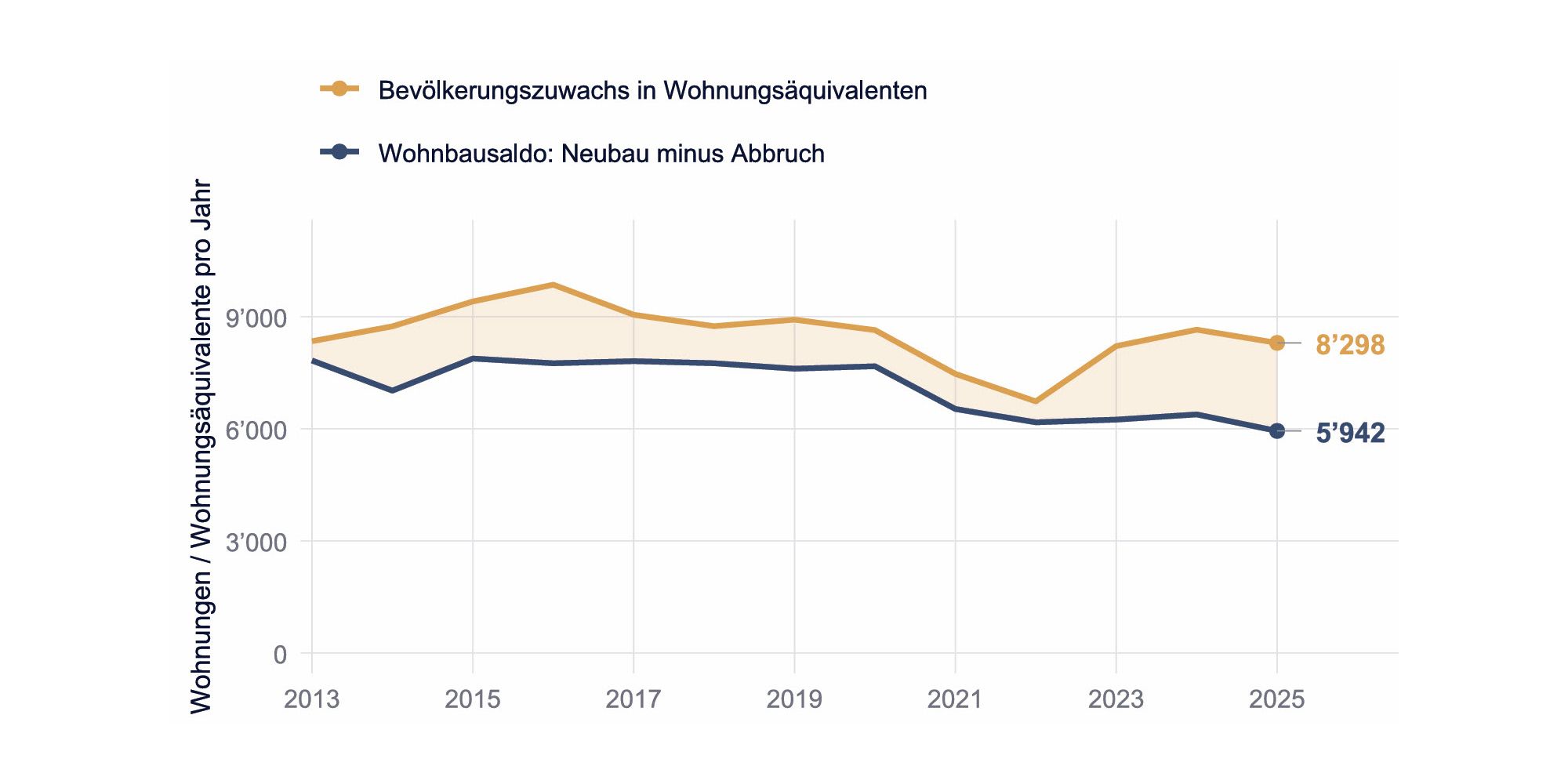
Added to this is a structural effect: whilst an average of around 1,500 dwellings were demolished annually in the early 2010s, the figure today is regularly around 2,500. A growing proportion of new builds therefore merely replaces existing stock rather than expanding the supply.
The idea: housing on industrial sites
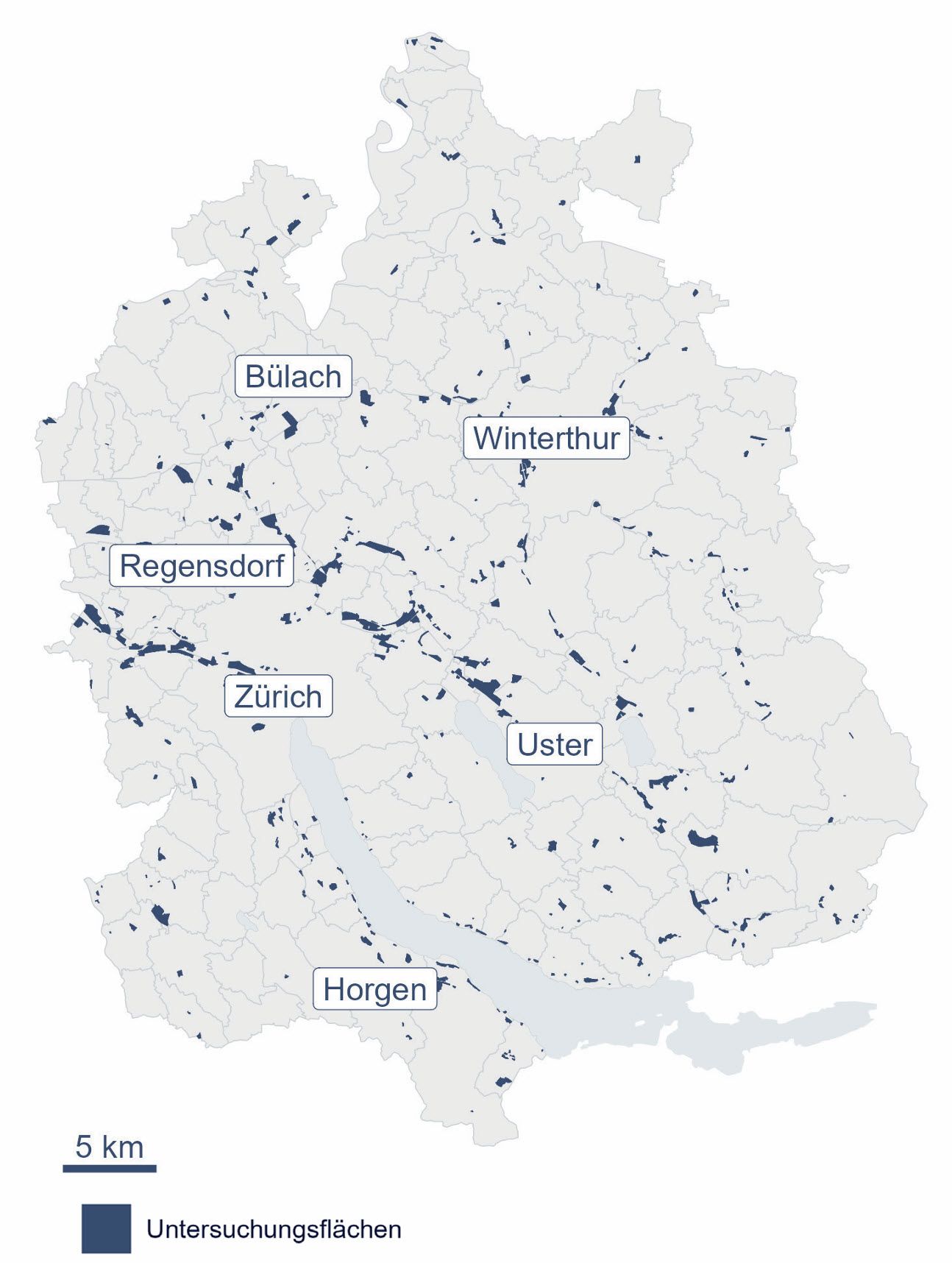
The study “Housing Potential in the Canton of Zurich”, published in October 2026, asks whether industrial and commercial sites could be part of the solution. The study examined 9,300 plots across 123 municipalities. The assumption: on suitable sites, additional housing will be permitted, existing buildings will be retained, and outdoor areas required for business operations will be kept free. At present, zoning regulations place strict limits on such uses.
The figures: around 16,000 additional flats possible
Depending on the building density, the study estimates the construction capacity at around 11,300 to 20,600 additional flats. In the moderate scenario, this amounts to just under 16,000 flats, or 1.66 million square metres of net residential floor area. This potential is spread across around 1,250 plots in 115 municipalities, with the 100 largest plots accounting for around 41 per cent. In addition, there is a separate, exploratory model calculation regarding the partial conversion of existing buildings, which yields a figure of around 4,650 housing equivalents.
Important: The study merely describes the construction capacity and does not constitute a forecast. Whether and when housing will be built depends on planning and legal requirements, the availability of land and the willingness of the owners.
The time factor: Relief is on the way, but slowly
Assuming that 30 per cent of the remaining potential is mobilised within ten years, this would result in around 4,200 flats by the end of 2035 if work begins in mid-2027, around 2,900 if work begins in mid-2030, and around 1,400 if work begins in mid-2033. With an early start date, this equates to around 490 flats per year – roughly 8 per cent of the average annual housing construction output for the years 2023 to 2025. In relation to the housing stock, this amounts to 0.5 additional flats for every 100 existing ones by 2035 and 1.3 by 2055. The authors themselves emphasise that this is a benchmark, not confirmed completion dates.
Where it could become a reality
The study makes no statements regarding purchase prices or the luxury segment. However, it does provide insights relevant to the owner-occupied housing market. Our conclusions are an interpretation of the findings and do not represent the study’s own position.
Firstly: Even under favourable assumptions, the additional supply would only materialise gradually and would add just a few per mille to the existing stock each year. No noticeable easing of market pressure can be inferred from this; the shortage is likely to persist in principle.
Secondly: The potential development is concentrated in specific locations, which may lead to noticeable local changes in the surrounding area, for example in neighbourhoods that are evolving towards mixed-use development.
Thirdly: The study primarily concerns industrial and commercial sites. The market for villas, lakeside properties and freehold flats in prime locations is generally not directly affected by this.
Why expert advice matters now
Anyone buying or selling in this environment should have a thorough understanding of the micro-location: Which areas in the vicinity might undergo change in the coming years, and what does this mean for views, transport and property value? An experienced estate agency monitors such planning developments, contextualises them and assesses properties realistically. It knows the local authorities and their scope for action, secures access to properties being marketed discreetly and supports negotiations, whilst advising on financing and the conclusion of contracts. This provides reassurance, particularly when there is uncertainty about a neighbourhood’s future development.
You can download the full study as a PDF here (in German languade only).