

Gerhard Richter’s Strip Tower in the Engadin.
03.02.2026A tower of colour that deliberately eludes any narrative interpretation and instead focuses on perception, rhythm and time. Gerhard Richter’s Strip Tower in the Engadin is not an object of admiration, but rather an invitation to a concentrated experience. Here, one of the central positions of international contemporary art meets a landscape of extraordinary clarity. The result is a quiet but lasting cultural dialogue that further enlivens the cultural space of the Engadin.
New in the Engadin: a work of art by Gerhard Richter
Some days now, the LUMA Foundation in Engadin presents a magnificent work by the internationally renowned artist Gerhard Richter. The Strip Tower, which is around 5 metres high and clad in glazed ceramic tiles, will remain open to the public for three years and enrich the alpine landscape.
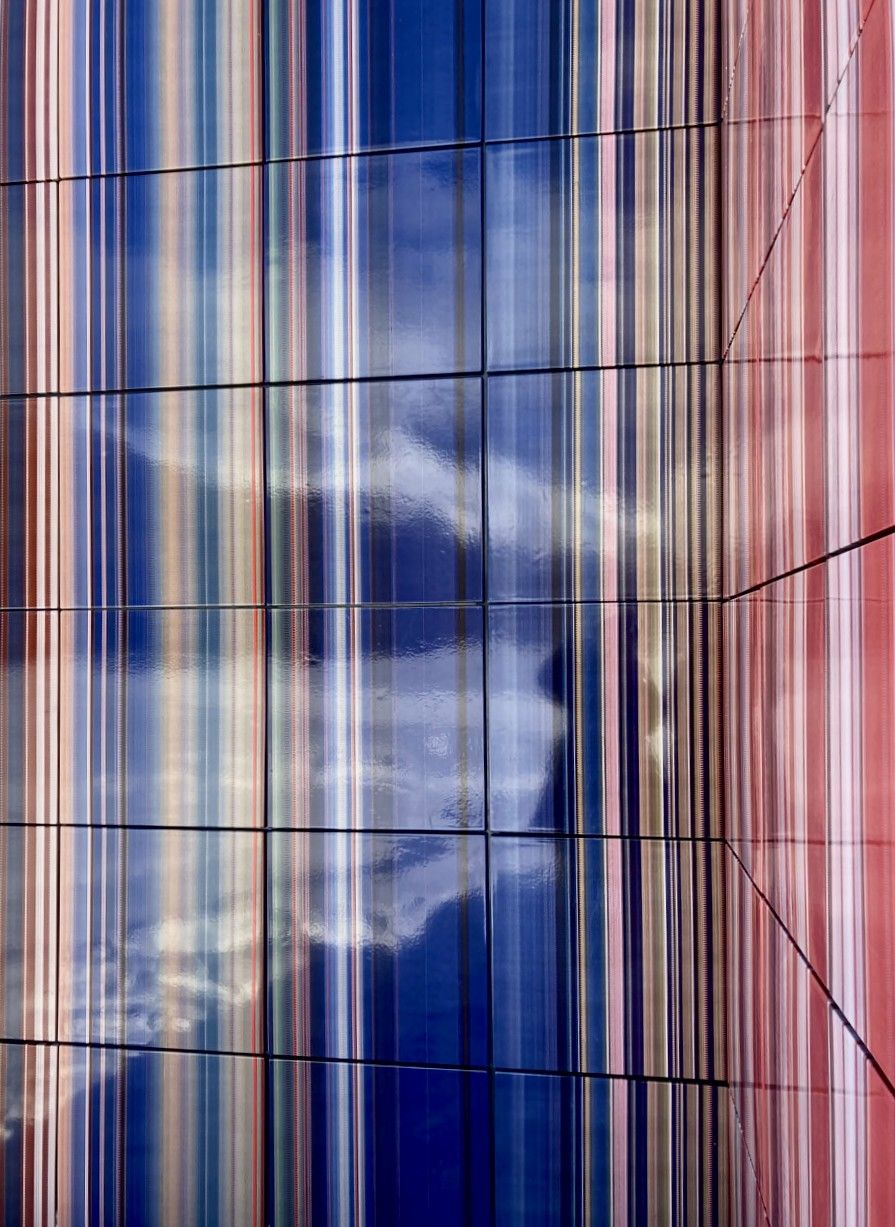
The website of elevation1049, a project sponsored by the LUMA Foundation, states: “Rising over five metres, the intersecting panels create a cross-shaped interior space that visitors can enter, immersing them in shifting fields of colour and light. The work transforms abstraction into a spatial experience, engaging perception, materiality, and the surrounding Alpine landscape of Sils Maria – a place Richter has visited regularly since 1989, drawn to its crystal-line light, dramatic topography, and contemplative atmosphere.”
The Strip Tower: Painting becomes architecture
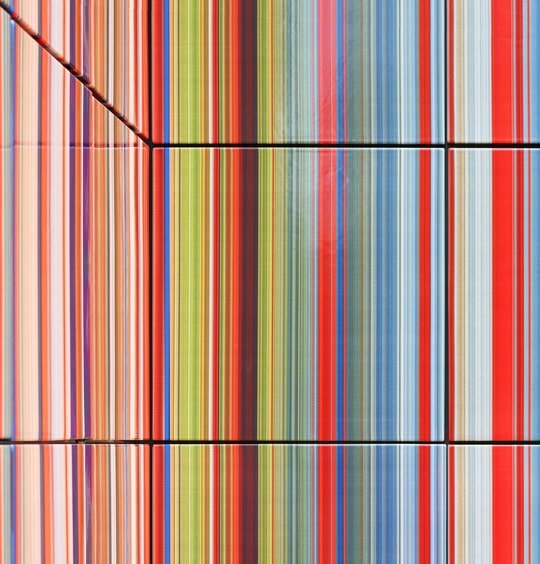
The Strip Tower is more than a sculptural extension of painting. It transfers Richter’s famous striped paintings into space and makes colour, structure and repetition physically tangible. Vertical bands of colour run the height of the building, creating a visual movement that inevitably draws the eye upwards. What might initially appear ornamental proves, on closer inspection, to be a rigorously composed system. The tower demands time, distance and attention – qualities that have become rare in today’s visual culture.
Order, chance and control
Richter’s stripes are not the result of spontaneous gestures, but of a highly reflective process. Richter analysed, dismantled, duplicated and reassembled digital image templates before translating them back into a painterly logic.
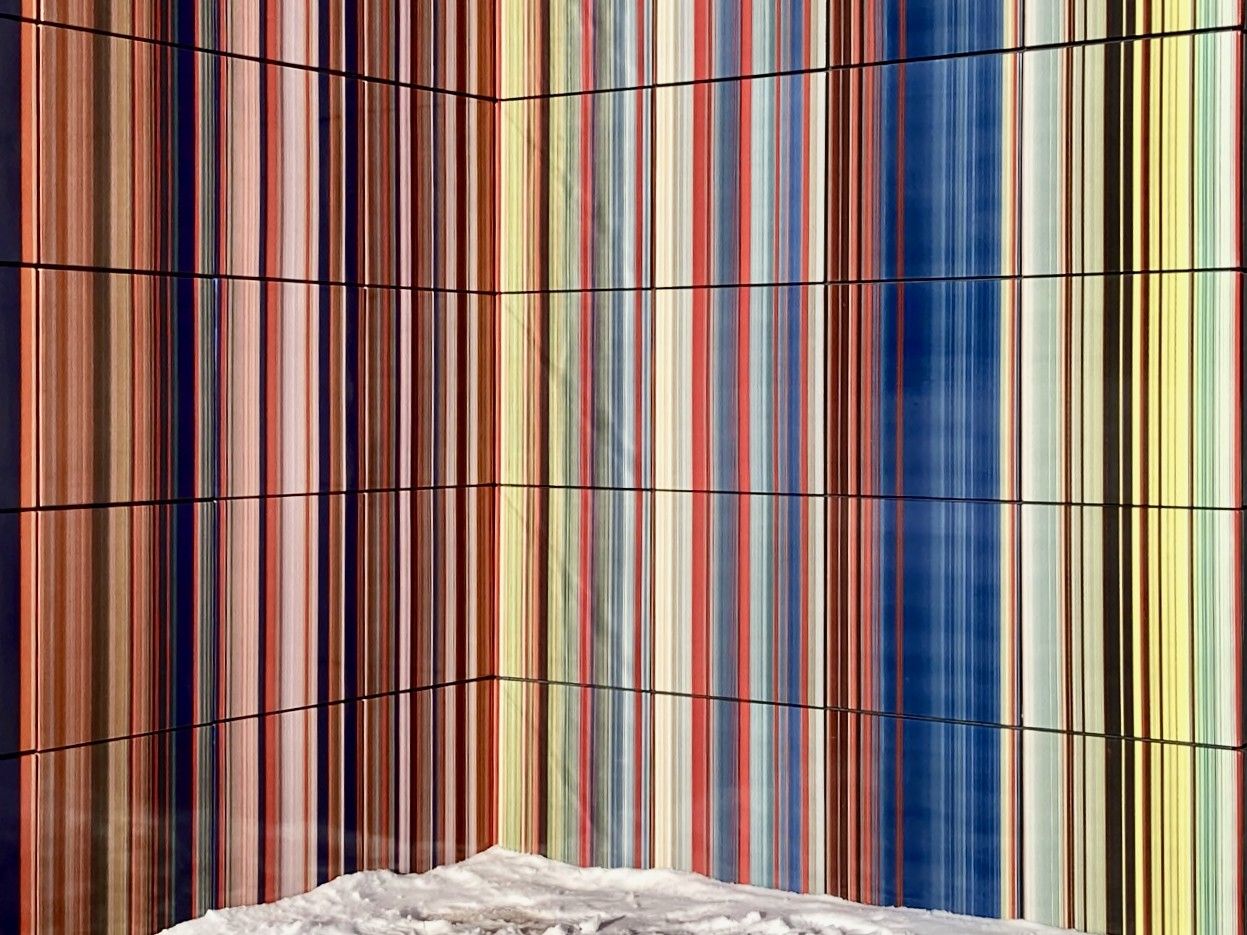
The artist consistently balances between chance and control, between technical precision and sensual effect. It is precisely this tension that gives Strip Tower its depth. It is not an expression, but the result of thinking in images.
Gerhard Richter and contemporary culture
Gerhard Richter is one of the few artists who have fundamentally expanded painting without ever leaving it behind. His work moves confidently between photorealism and abstraction, between historical reflection and formal rigour. In doing so, he rejects simple interpretations and fixed positions. This productive uncertainty is one of Richter’s central contributions to modern culture. He has shown that art does not have to explain, but may ask questions – and that it is precisely in this that its social relevance unfolds.
The Engadin as an ideal context
The Engadin is a place of reduction and clarity. Light, topography and vastness sharpen perception here and encourage an intense engagement with art.
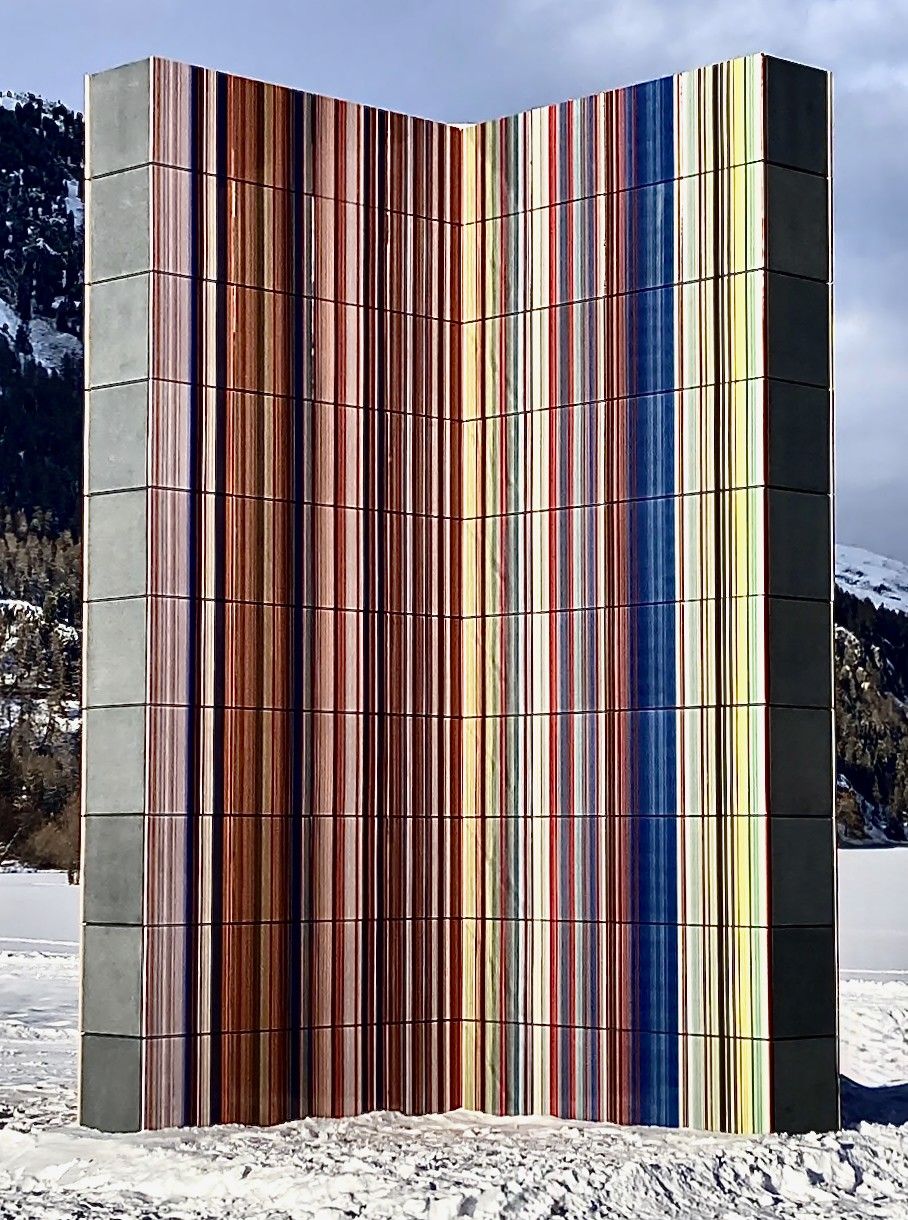
The Strip Tower does not blend into the landscape, but rather contrasts it with an autonomous order. This is precisely what creates resonance. Architecture, art and nature exist in a tense relationship that does not aim for harmony, but rather for awareness.
Cultural roots with international appeal
Gerhard Richter’s presence in the Engadin is more than just a curatorial stroke of luck. It signals cultural ambition, international connectivity and intellectual openness. The Strip Tower positions the valley as a place of contemporary reflection and not merely as a backdrop for enjoying art. Here, art is not consumed, but taken seriously.
Gerhard Richter and the Engadin
Gerhard Richter brings global artistic relevance to a geographically concentrated space. His Strip Tower is exemplary of art that has a quiet effect but resonates for a long time. For the Engadin, this means cultural consolidation at the highest level – beyond events and spectacle. The artist does not lend the place volume, but weight.
Regarding Richter’s relationship with the Engadin, the online magazine SIM’s Kultur.eu, a cultural guide for Europe, writes: “Sils Maria is also a familiar place for Gerhard Richter himself. He has returned regularly to the Engadin since his first visit in 1989. The crystal-clear light, the striking topography and the contemplative atmosphere are closely related to his lifelong interest in repetition, chance, reflection and the instability of visual certainty. In STRIP TOWER (962), these questions are articulated in a form that is both monumental and quiet – present without being loud.
The Engadin – a region with a rich cultural life
The Engadin is not only an extremely attractive place to live and holiday, but also a place with a lively cultural scene. Artists such as Ferdinand Hodler, Cuno Amiet and Alberto Giacometti, and philosophers such as Friedrich Nietzsche, have close ties to the Engadin. Giovanni Segantini even settled here. One of the most extensive collections of his works is on display at the Segantini Museum in St. Moritz. More than 20 other museums dedicated to the history and culture of the region shape the cultural landscape of the Engadin. The impressive Museum Engiadinais, for example, takes visitors through 500 years of interior design from the Engadin and neighbouring regions in 21 exhibition rooms.